Pflugerville Water Damage Restoration: The 8-Step Process
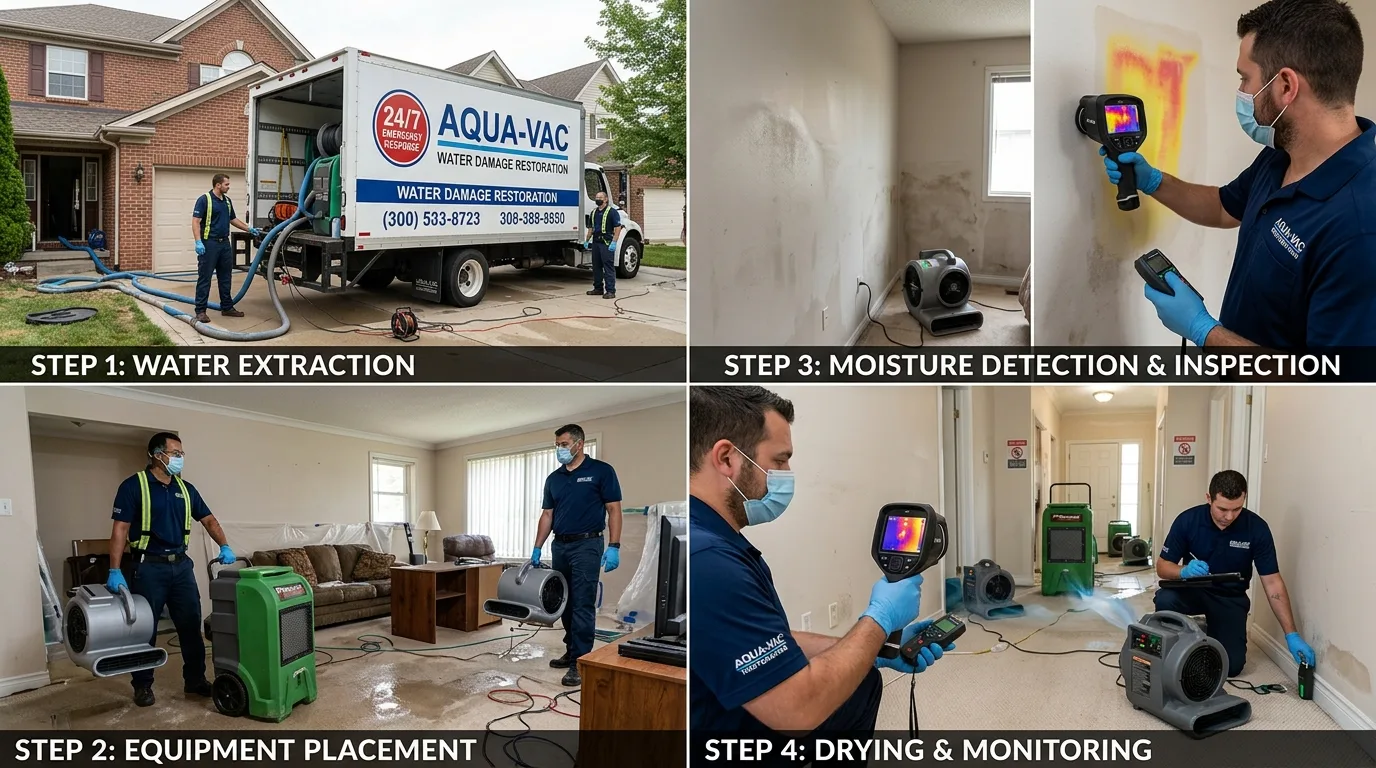
Most Pflugerville homeowners facing a water emergency have never gone through the restoration process before. They don’t know what to expect, what questions to ask, or how to evaluate whether the work is being done correctly. This post walks through the complete 8-step water damage restoration process that IICRC certified professionals follow — from the initial emergency call through final documentation. Understanding the process helps you make better decisions, ask better questions, and protect your insurance claim.
Water Damage Emergency in Pflugerville?
Our IICRC certified team follows a documented 8-step restoration process with daily updates. Call (877) 698-1311 — 24/7 response.
Step 1: Emergency Contact and Dispatch
The process starts the moment you call. A trained dispatcher takes information about the water source, the affected areas, and any safety concerns — gas leaks, electrical hazards, possible sewage contamination. Based on this triage, the appropriate crew size and equipment load is dispatched. For most Pflugerville emergency calls, a crew arrives within hours.
During the call, you’ll be asked to shut off the water main if the source is a plumbing failure and to document visible damage with photos before touching anything. These two actions limit further damage and protect your insurance claim before we arrive.
Step 2: Damage Assessment and Safety Evaluation
On arrival, the restoration team’s first task is a systematic damage assessment — not extraction. This step determines the full scope of the project and prevents incomplete work. The assessment uses:
- Moisture meters to measure water content in drywall, wood framing, and flooring
- Thermal imaging cameras to detect hidden moisture behind walls and under flooring
- Water category determination — whether the water is clean (Category 1), gray water (Category 2), or sewage-contaminated black water (Category 3)
The category determination drives every downstream decision: extraction equipment, personal protective equipment, whether affected materials can be dried in place or must be removed, and what antimicrobial protocols are required. An assessment that skips moisture mapping is an assessment that will miss hidden saturation — the source of most mold problems that appear weeks after “completed” restoration.
Step 3: Water Removal and Extraction
Once the scope is mapped, extraction begins using truck-mounted or portable industrial extractors. These machines generate far more suction than any consumer-grade shop vacuum. Extraction removes standing water from floor surfaces and, with specialized attachments, from wall cavities and under hard flooring.
For Category 3 sewage events, extraction is performed with full PPE and regulatory compliance for biohazard water handling. Affected porous materials — drywall, insulation, carpet, wood flooring — that have been in contact with Category 3 water must be removed and disposed of rather than dried in place.
Step 4: Structural Drying Setup
After extraction, industrial air movers and dehumidifiers are deployed in a calculated pattern designed to dry the specific materials and volumes involved. Structural drying is a science, not a guess — the number, placement, and settings of equipment are determined by the moisture readings from Step 2, the cubic footage of the space, and the types of building materials involved.
This is where many DIY attempts and low-quality restoration jobs fail: household fans do not generate sufficient airflow across wet structural surfaces, and without commercial dehumidifiers running simultaneously, fans simply spread moisture-laden air rather than removing it. Insurance adjusters are trained to look for documented equipment logs that prove proper drying was performed.
Is Your Pflugerville Home Drying Correctly?
Daily moisture monitoring and documented structural drying — our process protects your home and your insurance claim. Call (877) 698-1311.
Step 5: Dehumidification and Daily Monitoring
Structural drying is not a set-it-and-forget-it process. Effective dehumidification requires daily monitoring and adjustment. Each day, a technician visits the job, takes moisture readings at all monitored points, records the data, and adjusts equipment placement or settings based on progress.
In Pflugerville’s humid subtropical climate, outdoor humidity often exceeds 70% during summer months — conditions under which inadequate dehumidification allows ambient moisture to re-wet structural materials even while equipment is running. Our monitoring protocols track both structural moisture content and indoor relative humidity, adjusting the drying system to maintain conditions where moisture is consistently moving out of building materials.
Drying typically takes 3–7 days for residential projects, with progress visible in daily moisture readings.
Step 6: Mold Prevention Treatment
Once drying is confirmed, antimicrobial treatment is applied to all affected surfaces — whether or not visible mold is present. This preventive step kills any mold spores that may have established during the water exposure period before they can develop into active colonies. In Pflugerville’s climate, where mold can establish within 24–48 hours of water intrusion, this step is non-negotiable on any job where drying took more than two days.
If mold is already visibly present, the project scope expands to include full TDLR licensed mold remediation: containment, HEPA vacuuming, physical removal of affected materials, antimicrobial treatment, and post-remediation clearance testing.
Step 7: Reconstruction
After drying is confirmed by final moisture readings and antimicrobial treatment is complete, reconstruction begins. This phase replaces the building materials that were damaged or removed: drywall, insulation, flooring, baseboards, cabinets, and any other affected components.
Reconstruction is performed to meet current Pflugerville building code standards, which may require permits for structural, plumbing, electrical, or mechanical work. Travis County also requires permits for repairs to flood-damaged structures with a contractor-provided line-item estimate. We coordinate all permit applications so your reconstruction is fully compliant.
Step 8: Final Documentation and Insurance Claim Closure
The final step is documentation — and it’s as important as any physical work. A complete restoration file includes:
- Initial moisture map showing all saturation locations and readings
- Daily moisture logs for the entire drying period
- Equipment placement records and operating hours
- Photo documentation at every phase
- Antimicrobial treatment records
- Final drying certificate confirming all materials reached acceptable moisture levels
- Permit documentation if applicable
This file is your insurance adjuster’s primary evidence for claim authorization. It’s also your permanent property record — if you sell your Pflugerville home, this documentation demonstrates that the restoration was performed to professional standards.
How the 8-Step Process Protects Your Investment
The step sequence isn’t arbitrary — it reflects the physical requirements of water damage restoration. Assessment must precede extraction to prevent missed moisture. Drying must precede reconstruction to prevent mold encapsulation. Documentation must be continuous throughout to support insurance claims. Skipping or abbreviating any step creates the problems that generate callbacks, insurance disputes, and future mold issues.
For most Pflugerville residential projects, this 8-step process runs 2–4 weeks from emergency call to final documentation delivery.
Frequently Asked Questions
How do I know if drying is complete?
Drying is complete when calibrated moisture meter readings at all monitored points reach acceptable baseline levels for the material type — not when things feel or look dry to the touch. Wood framing should measure below 19% moisture content; drywall should be at or near ambient levels for the region. We provide you with a final drying certificate that documents these readings. Never rebuild over materials whose dryness has not been verified by calibrated instruments.
What if mold is found during the process?
If mold is discovered during the damage assessment or during drying — as it often is when water sat for more than 48–72 hours before restoration began — the project scope expands to include TDLR licensed mold remediation before reconstruction. This adds time (typically 3–7 additional days for the mold scope) but is necessary to ensure the finished property is genuinely safe. Insurance typically covers mold remediation when it results from a covered water damage event.
Can I stay in my Pflugerville home during restoration?
For Category 1 and 2 water events affecting part of the home, most homeowners can remain in residence in unaffected areas. For Category 3 (sewage) events or large-scale flooding affecting most of the home, temporary relocation may be recommended for health and safety reasons. Restoration equipment (air movers and dehumidifiers) is noisy and runs 24 hours per day — sleeping comfort in adjacent areas is limited. Your insurance policy may cover additional living expenses for covered losses.
Related reading: