Falcon Pointe Water Damage Restoration Near Lake Pflugerville
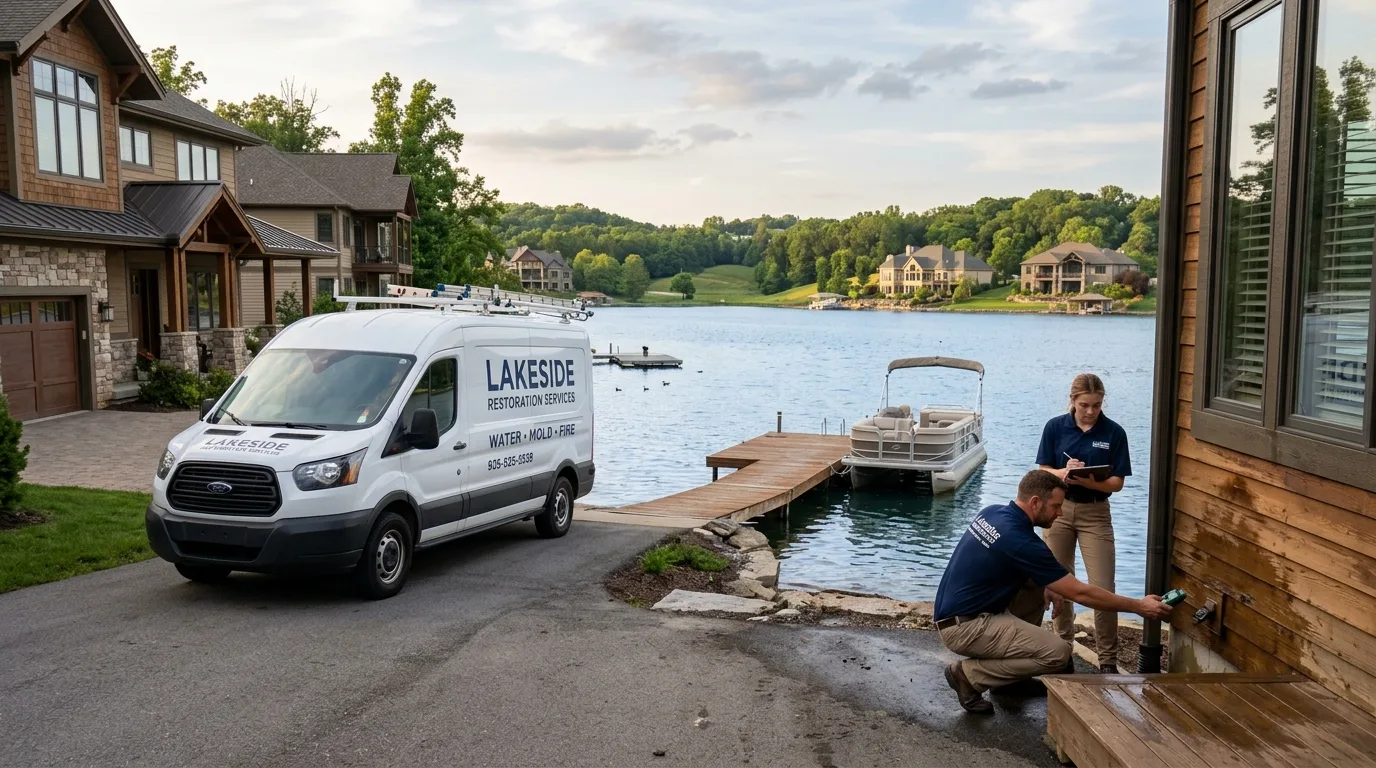
Falcon Pointe is one of Pflugerville’s most sought-after neighborhoods — a large master-planned community with top-rated builders, green spaces, and proximity to Lake Pflugerville, the city’s 180-acre recreational lake. The lake and the community’s position within Pflugerville’s watershed create specific water damage dynamics that homeowners here should understand. This post covers the water risks particular to Falcon Pointe, the restoration services our team provides in this neighborhood, and what residents near Lake Pflugerville should know before the next major storm.
Water Damage in Falcon Pointe? Call (877) 698-1311
24/7 emergency water extraction and restoration for Falcon Pointe and all Pflugerville neighborhoods. IICRC certified team.
Water Risk Factors Specific to Falcon Pointe
Proximity to Lake Pflugerville watershed. The 180-acre Lake Pflugerville and its surrounding drainage watershed receive significant surface runoff during major storm events. While the lake itself has managed drainage infrastructure, the surrounding watershed means that homes in Falcon Pointe — particularly those in sections closest to the lake and its inflow drainage corridors — experience higher surface water exposure during extreme rainfall events than properties farther from the watershed. Pflugerville’s moderate flood risk score of 49% on Augurisk reflects conditions across the city, but properties adjacent to drainage pathways experience above-average exposure within that overall figure.
Clay soil dynamics in a newer development. Unlike Blackhawk, which represents older construction, Falcon Pointe includes many homes built more recently — during the 2000s and 2010s. Newer construction doesn’t eliminate clay soil risk. In fact, during the first decade after construction, clay soil adjacent to new foundations is still settling and compacting after the site preparation disturbance, which can create drainage patterns different from the finished grade design. Underground pipe connections in recently constructed Falcon Pointe homes may experience stress from settling soil before the surrounding landscape is fully established.
Top-rated builder construction meets real Texas conditions. Falcon Pointe’s reputation for quality construction is warranted, but no construction is immune to the forces Pflugerville’s geology and climate apply over time. The same freeze vulnerabilities that affected Blackhawk in 2021 apply equally to Falcon Pointe — attic pipe runs and exterior wall plumbing are vulnerable during extended hard freezes regardless of the original construction quality.
Water Damage Restoration for Falcon Pointe Homes
Our team serves all of Falcon Pointe with the same IICRC certified restoration services available throughout Pflugerville:
Emergency response: 24/7 dispatch for burst pipes, flood intrusion, and sewage backup. Truck-mounted extraction equipment for rapid standing water removal. Same-day moisture assessment with thermal imaging to identify all saturation — including moisture that has migrated from the initial intrusion point.
Flood damage cleanup: For homes near Lake Pflugerville that experience water intrusion during major storm events, our flood damage cleanup service provides complete response from Category 1 through Category 3 events. The drainage proximity that makes Falcon Pointe beautiful also means that an extreme rainfall event can bring water from unexpected directions — overland flow from the watershed, not just pipe failures.
Structural drying: Industrial dehumidifiers and air movers deployed to IICRC drying standards, with daily moisture monitoring and documented logs for insurance claims. Falcon Pointe slab-on-grade construction is addressed with mat drying systems for flooring where applicable.
Mold remediation: TDLR licensed mold inspection and remediation for Falcon Pointe homes that experienced water intrusion without professional drying. Given the humidity levels in summer months near Lake Pflugerville, mold risk after any undried water event is elevated.
Flood or Water Damage Near Lake Pflugerville?
We serve all of Falcon Pointe with 24/7 emergency restoration. Call Pflugerville Water Damage Restoration at (877) 698-1311.
What to Know About Drainage and Flood Risk Near the Lake
Lake Pflugerville’s management infrastructure includes overflow controls, but the surrounding watershed’s behavior during a major storm depends on the storm’s intensity and duration. Pflugerville’s Blackland Prairie clay soils — present throughout Falcon Pointe as they are throughout the rest of the city — absorb water very slowly. During a heavy spring thunderstorm that deposits several inches in a short period, surface water moves laterally across the clay surface toward low points rather than infiltrating the ground. Properties in lower-lying sections of Falcon Pointe that sit at natural drainage collection points experience the highest surface water exposure.
This doesn’t mean Falcon Pointe is high-risk compared to other Pflugerville neighborhoods — it means the specific drainage topography around your property within the community matters. Walk your property boundary during the next moderate rainstorm and observe where water moves: this gives you the ground-truth picture of your specific exposure. Any area within 10 feet of your foundation that collects standing water deserves drainage attention before a major storm season.
Practical Prevention Steps for Falcon Pointe Homeowners
Check your roof drainage. Falcon Pointe homes often have complex rooflines with multiple valleys and downspout penetrations. Ensure all downspouts discharge at least 6 feet from the foundation and that any drainage problems identified at valley and transition points are addressed before spring storm season begins in March.
Consider flood insurance. Falcon Pointe’s FEMA Zone X designation means standard flood insurance is available at lower preferred-risk rates. Given the community’s watershed proximity and Pflugerville’s documented flash flood risk, this coverage gap is worth closing.
Preventive sewer inspection. As Falcon Pointe’s older sections approach 20 years, sewer lateral inspections become increasingly worthwhile. Root intrusion patterns vary by property depending on landscaping, but the clay soil dynamics that affect all of Travis County make lateral inspection a good investment for properties with established trees near the sewer easement.
Cost and Insurance Context
Water damage restoration costs in Falcon Pointe align with Pflugerville’s local average of $2,912–$3,137 for standard water mitigation, at $14–$16 per square foot. Flood-adjacent events that involve Category 3 contamination run higher. Insurance coverage for internal water damage sources (burst pipes, appliance failures) is standard; flood insurance for external water intrusion requires a separate policy. We document all events completely for your insurer and coordinate Travis County permit requirements for all structural repair work.
Frequently Asked Questions
Does living near Lake Pflugerville increase my water damage insurance rates?
Property insurance rates are influenced by multiple risk factors including flood zone designation, claims history, and proximity to bodies of water. FEMA Zone X properties — which covers most of Falcon Pointe — typically pay lower NFIP flood insurance rates than higher-hazard zones. For standard homeowner insurance, your carrier sets rates based on their own risk model, which may or may not reflect proximity to Lake Pflugerville specifically. Consult your agent about the factors driving your current rate.
How quickly can you reach Falcon Pointe in an emergency?
We provide 24/7 emergency response throughout Pflugerville, including all of Falcon Pointe. Call (877) 698-1311 any time and our dispatcher routes the nearest available crew to your location. For major weather events that produce multiple simultaneous calls across Pflugerville, we prioritize by severity and dispatch accordingly.
What’s the difference between flood damage cleanup and standard water damage restoration?
Standard water damage restoration typically addresses internal sources: burst pipes, appliance failures, HVAC leaks. Flood damage cleanup addresses external water sources — storm flooding, overland surface water, drainage overflow. The protocols differ because flood water may carry contamination from soil and municipal drainage that internal supply water doesn’t. See our posts on flood damage cleanup and water damage categories for more detail.
Related reading: