5 Signs of Water Damage Pflugerville Homeowners Should Never Ignore
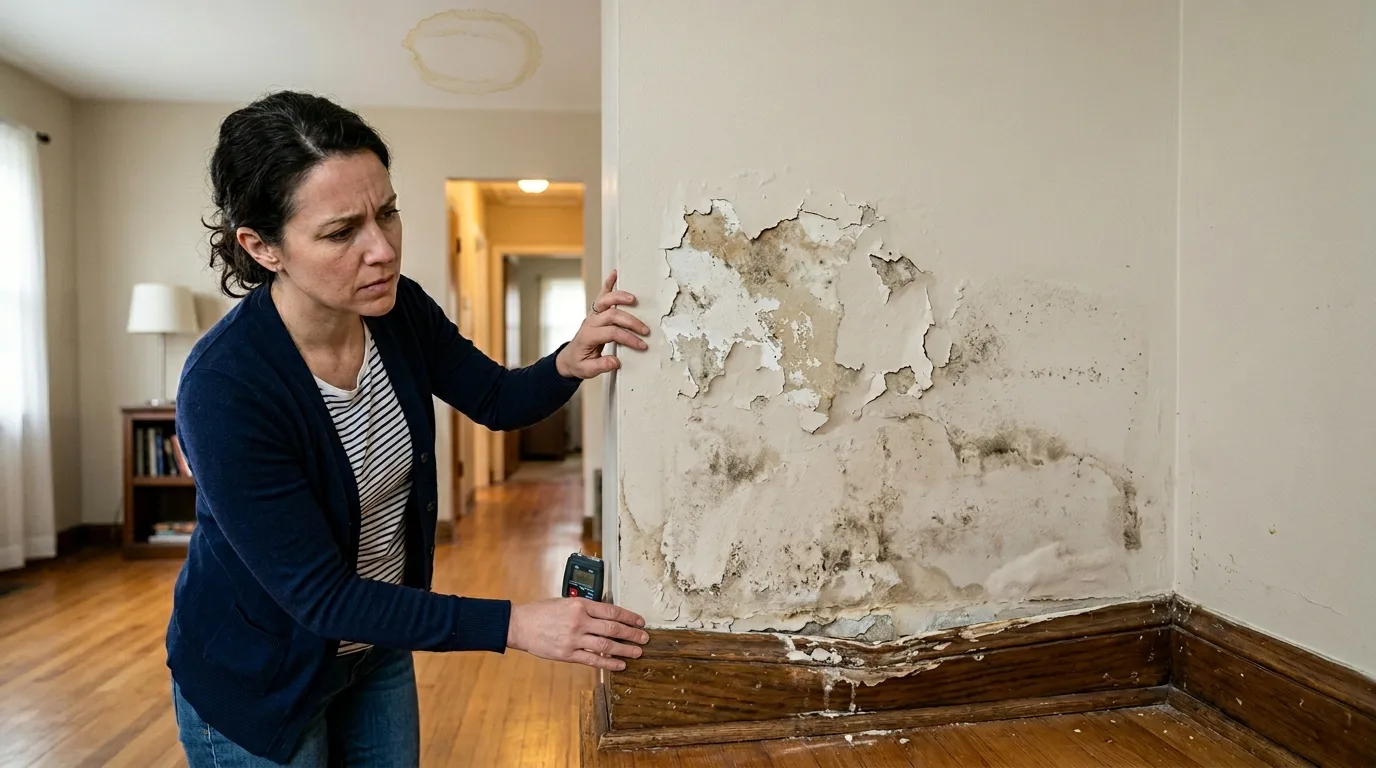
Every year, Pflugerville homeowners discover water damage that has been developing silently for weeks or months — visible only after the problem has grown expensive. Knowing what to look for before you smell the mold or see the warped flooring can save thousands in restoration costs. In this post, we cover the 5 most commonly missed signs of water damage in Pflugerville homes, what each one typically indicates, and when to call for professional assessment.
Signs of Water Damage in Your Pflugerville Home?
Get a professional moisture assessment — our IICRC certified team serves all of Pflugerville and Travis County. Call (877) 698-1311.
Why Early Detection Matters in Pflugerville
Pflugerville’s climate creates a particularly aggressive environment for water damage that isn’t caught early. The city’s humid subtropical climate means indoor moisture has nowhere to escape during summer months when outdoor humidity is already high. Mold — the most costly secondary consequence of water damage — can establish on wet drywall in as little as 24–48 hours in the warm, humid conditions common from May through September.
The Blackland Prairie clay soils beneath Pflugerville’s Blackhawk and Carmel neighborhoods also create a slow-leak pattern unique to this region: as the soil shrinks and swells with seasonal moisture changes, underground pipes develop micro-cracks that produce slow, hidden leaks rather than sudden dramatic failures. By the time the leak is obvious, structural drying and mold remediation may already be required. Knowing these 5 warning signs gives you a chance to catch water damage before it reaches that point.
Sign 1: Unexplained Increase in Your Water Bill
A water bill that spikes without a corresponding change in usage is one of the clearest early indicators of a hidden leak. Many Pflugerville homeowners dismiss a modest bill increase — 15 or 20 percent — as a metering issue or a forgotten outdoor irrigation change. But an underground supply line that has been stressed by years of clay soil movement may lose water at a rate that doesn’t cause visible flooding but does register on your meter.
Check your bill month over month, not just against the same month last year — Pflugerville’s seasonal water use varies significantly, so year-over-year comparisons can mask a developing issue. If you see an unexplained increase that persists for two or more billing cycles, a leak detection inspection is warranted. See our guide on emergency pipe burst repair in Pflugerville for context on how these leaks develop.
Sign 2: Musty Odor in a Specific Room
A musty, earthy odor that is strongest in a specific room — particularly a bathroom, laundry room, or area near exterior walls — almost always indicates active moisture and likely mold growth. Mold produces volatile organic compounds (MVOCs) that produce this odor even before visible growth is large enough to spot. In Pflugerville homes, the most common locations for this odor pattern are: under sinks with slow drain connections, inside walls adjacent to shower and tub enclosures, and in corner rooms where HVAC condensation lines pass through wall cavities.
Do not simply mask the odor or increase ventilation and assume the problem has resolved. A persistent musty smell in a localized area is a reliable indicator that moisture detection equipment will find elevated readings — and that a professional mold remediation inspection is warranted. Read our mold remediation guide for Pflugerville homes for more detail on what comes next.
Sign 3: Discoloration or Staining on Walls or Ceilings
Yellow, brown, or orange staining on drywall or ceiling material is one of the most recognizable signs of water intrusion — and one of the most frequently rationalized away. Homeowners often attribute a ceiling stain to a historic roof issue that “was fixed” or to a long-past overflow. The problem is that water stains, by definition, indicate that water has already saturated the building material, and saturated drywall is a growth medium for mold even after the surface dries.
A stain that has dried may not have dried behind the paper face — moisture can persist in the gypsum core and in the wall framing cavity for weeks. Check any stained area with your hand: if it feels cool or slightly soft compared to surrounding drywall, moisture may still be present. In the Falcon Pointe neighborhood, where many homes have complex rooflines with multiple valleys and penetrations, ceiling stains from slow roof leaks are a common presentation. Any stain that wasn’t there six months ago deserves professional moisture assessment.
Water Stains, Musty Odors, or High Water Bills in Pflugerville?
Don't guess — get a professional moisture inspection before the damage grows. Serving all of Pflugerville and Travis County. Call (877) 698-1311.
Sign 4: Warped, Buckled, or Soft Flooring
Flooring that has begun to buckle, cup, feel spongy underfoot, or separate at seams is one of the clearest structural signals that moisture has penetrated below the surface. This sign appears in both hardwood and engineered wood flooring and can also manifest in vinyl plank flooring as bubbling or lifting along edges. In Pflugerville homes on slab foundations — the most common construction type here — moisture intrusion from below is typically caused by a plumbing leak in the slab, surface flooding that found a foundation penetration, or HVAC condensation overflow pooling beneath flooring.
Do not assume the warping is simply a humidity response that will self-correct. Once flooring material has absorbed enough moisture to buckle, the subfloor beneath it may also be saturated — and saturated subfloor material is a mold risk that requires dehumidification and structural drying, not just floor replacement. An IICRC certified water damage restoration inspection uses moisture meters to read subfloor moisture content accurately rather than guessing from surface appearance.
Sign 5: Mold Growth Near Grout Lines or in Corners
Visible mold — even the small “grout mold” that appears common in bathrooms — should never be dismissed as a cosmetic issue. Mold at grout lines or in the corners where walls meet floors indicates that moisture is penetrating beyond the surface. In Pflugerville homes, bathroom and laundry room grout failures are particularly common because the expansive clay soil movement affects the homes’ structural frames slightly over time, opening micro-gaps in tile installations.
Surface mold that can be wiped away is almost always the visible portion of a much larger colony growing in the wall cavity behind the tile. Texas TDLR regulations require licensed mold remediation contractors for any project involving more than 25 contiguous square feet — a threshold that is easy to reach once you consider the hidden area behind a tiled shower wall. If you see mold at grout lines, schedule a professional mold inspection before attempting any DIY cleaning that could spread spores to adjacent areas.
What to Do When You Spot Any of These Signs
Don’t wait. Water damage that is caught early — before it has saturated wall cavities, wicked into framing, or established mold colonies — is dramatically less expensive to remediate than damage that has been developing for weeks. A professional moisture assessment using thermal imaging cameras and calibrated moisture meters identifies the true extent of saturation in under an hour, giving you a clear scope and a documented baseline.
Based on 96 completed Pflugerville projects, water mitigation averages $2,912–$3,137 — but that reflects prompt response. Jobs where moisture has been developing for weeks or months grow in scope and cost proportionally. Insurance typically covers water damage from sudden events; the sooner you call, the cleaner the claim documentation.
Frequently Asked Questions
Can I check for hidden moisture myself before calling a professional?
You can get some indication by pressing your palm firmly against walls in the suspected area — cooler spots often indicate moisture. You can also check your water meter: turn off all water in the home, read the meter, wait 30 minutes without using any water, and read it again. Movement indicates an active leak. However, only calibrated moisture meters and thermal imaging cameras give accurate readings through wall assemblies. A professional inspection takes less than an hour and gives you data, not guesses.
How quickly does water damage become a mold problem in Pflugerville?
In Pflugerville’s warm, humid climate, mold can establish on wet drywall in 24–48 hours during summer months. In cooler winter conditions, the window extends to 48–72 hours. This is why emergency water extraction and structural drying are not optional — dehumidification must begin within the first day or two of water intrusion to prevent mold establishment in wall cavities throughout Blackhawk, Cantarra, and other Pflugerville neighborhoods.
Does homeowners insurance cover water damage from a slow leak?
Coverage depends on whether the leak was “sudden and accidental” in insurance terms. Burst pipes typically qualify. Slow leaks that developed over an extended period — the kind often caused by clay soil movement — may be categorized as maintenance issues and excluded from coverage. This is another reason early detection matters: a slow leak caught early, treated as an emergency, and documented from the start has better claim prospects than damage that was clearly long-standing.
Related reading: